Work / Nova Reply
A conditional onboarding: setup time goes from 45 to 20 minutes
I redesigned the AI assistant step of the onboarding. Users pick their channels, then set up only the related options. Setup time went from 45 to 20 minutes.
- Client
- Nova Reply
- Year
- 2026
- Tools
- Lovable
Measured with recorded think-aloud tests, timing the whole onboarding.?A think-aloud test: a user does a task and says out loud what they think and do. The session is recorded and timed, so we can see where they hesitate or get lost.
Context
An AI agent that answers every review, so business owners do not have to.
Nova Reply is an AI agent for local businesses. It replies to every customer review in the voice of the brand. It runs on Mistral AI.
What the agent does
- Connects to the social networks and review platforms first (Google, Facebook, Instagram, TripAdvisor, TheFork and more).
- Analyses what already exists, to find the key information about the business.
- Writes a reply to each review, in the voice the user set.
- Publishes it in the mode the user chooses: manual, automatic, or semi-automatic. In semi-automatic mode, a negative review gets a prepared reply, but the agent does not publish it.
Problem
A long setup means users give up before the tool works for them.
Setup took 45 minutes. Users set the voice once, then had to validate each platform to see the next one. They configured things they did not need, and got lost.
Solution
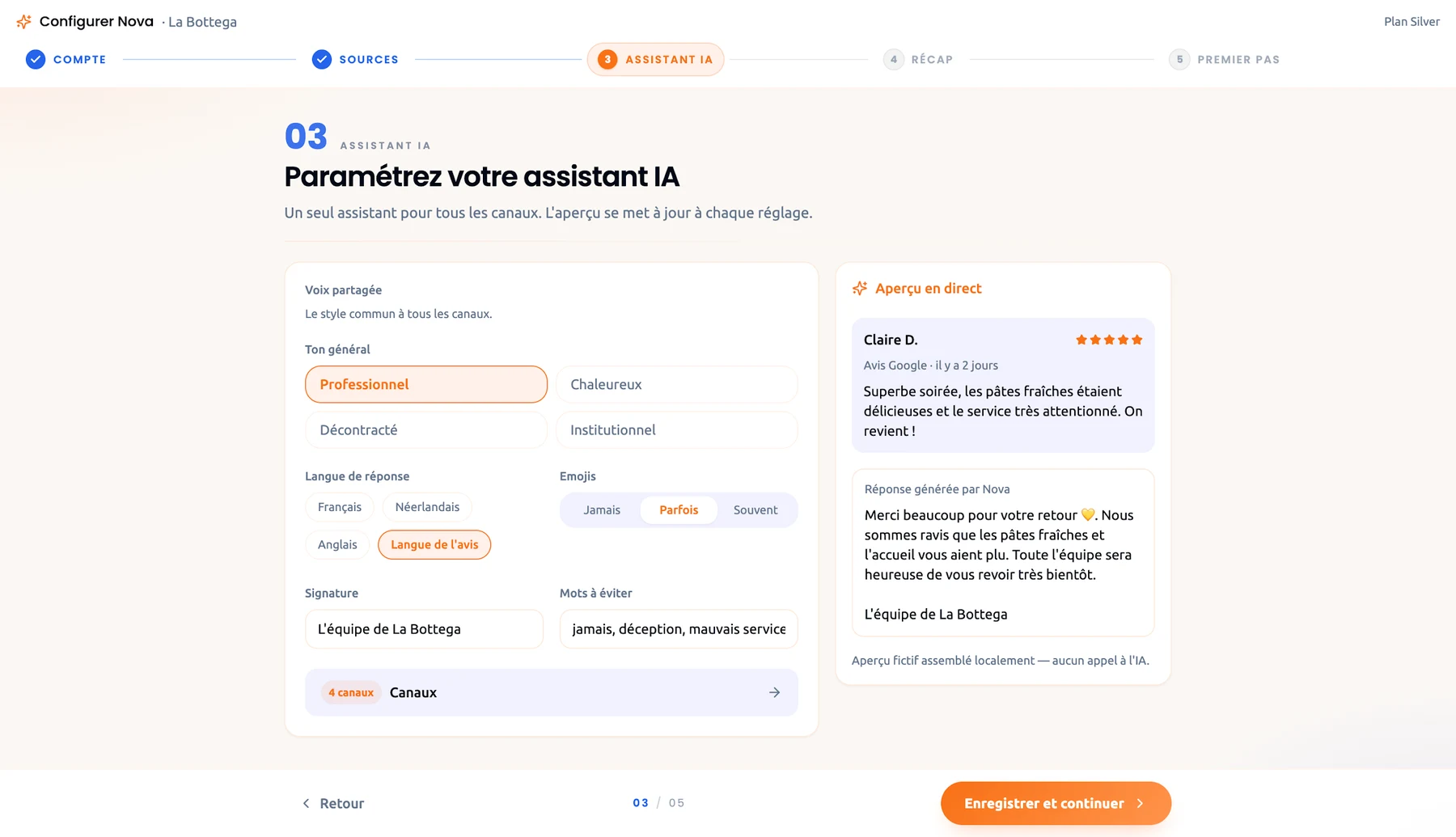
Users set up only what they need, in the order they want.
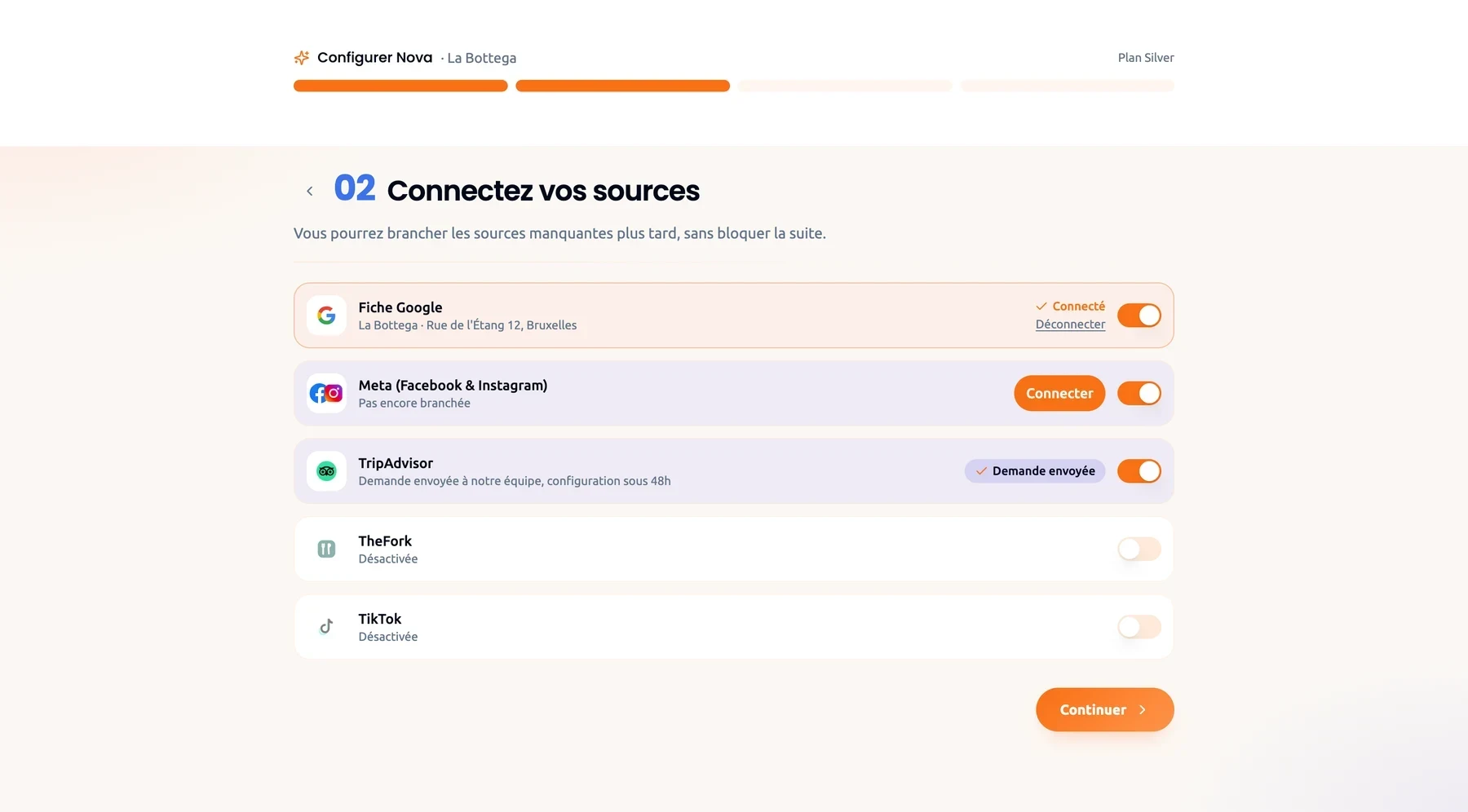
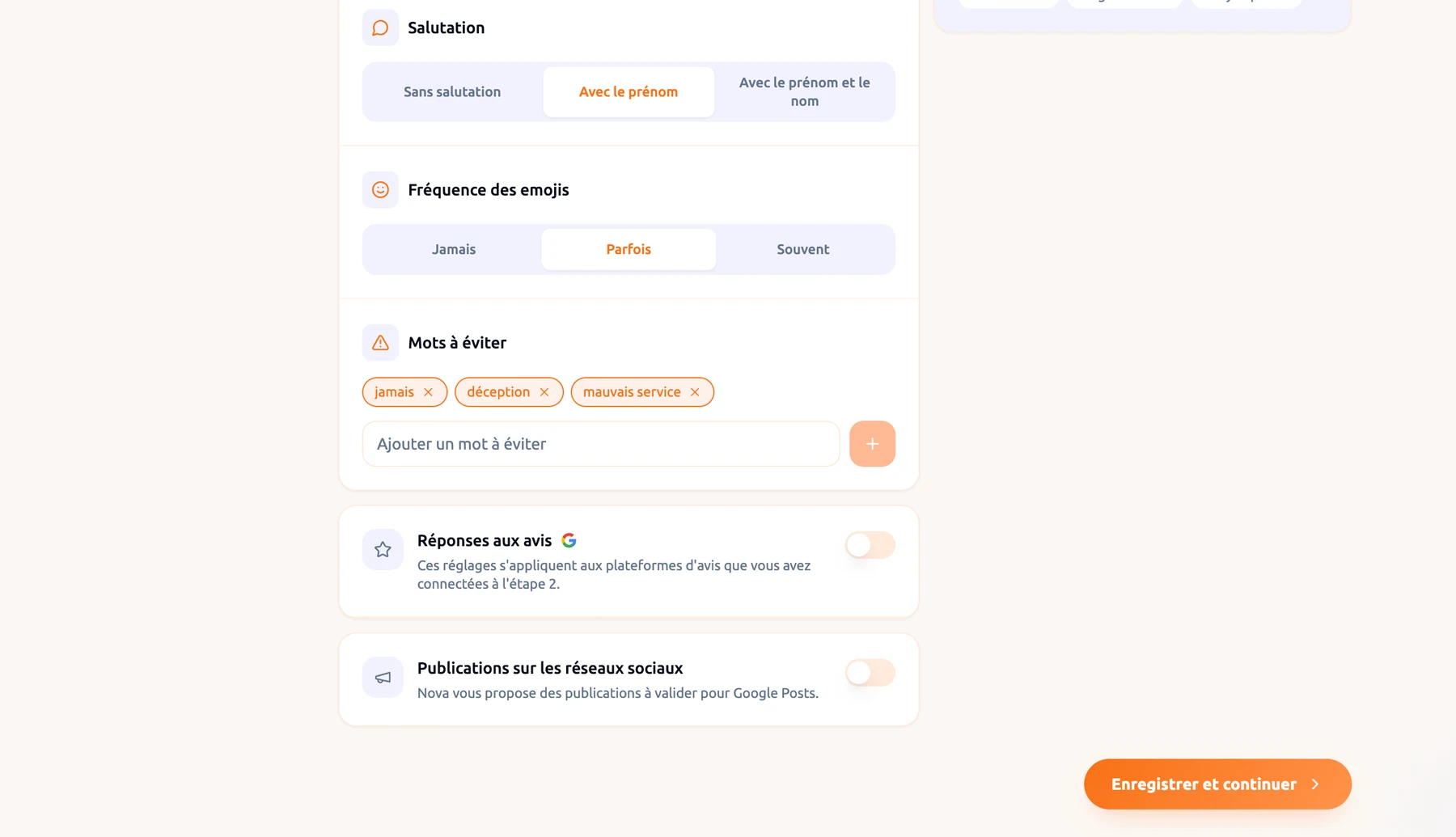
Users connect their sources first. Then each connected source gets its own card, with its settings and a live preview of how the agent will reply. A source that is not connected has no card, because there is no data for it yet. Users can skip a card and come back later: the app sends reminders, because the agent does nothing on a network until it is set up.
| Before | After | |
|---|---|---|
| Platforms to set up | All of them, one by one | Only the connected ones |
| Validation | Required to see the next one | None, any order |
| Timing | Everything now | Now or later, with reminders |
Style and design system
A consistent look makes the information easier to read.
The components were redesigned to match, so the information is easier to read. There was no design system with clear intentions, so I checked the consistency against a single global.css file. Everything was built with Lovable.